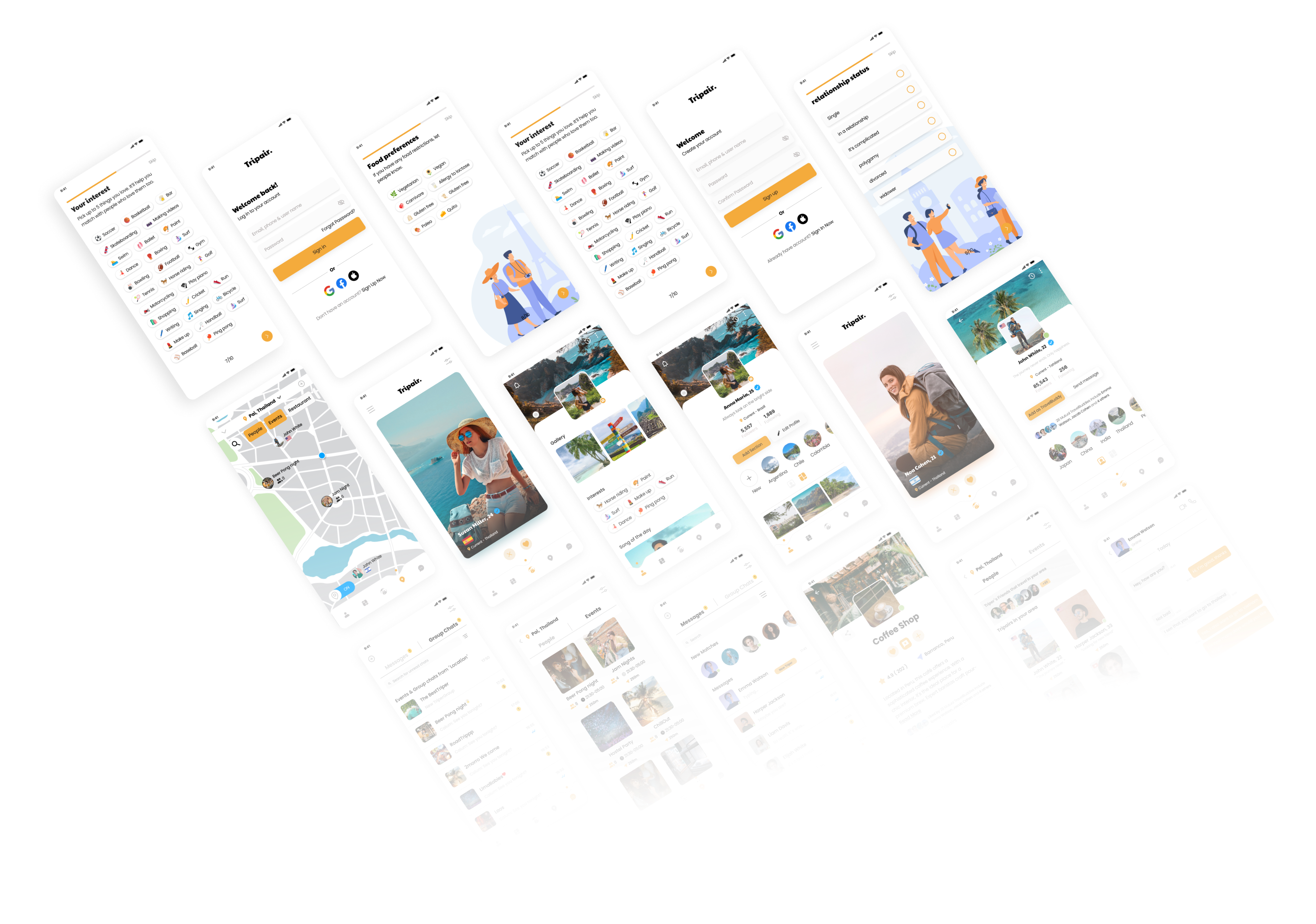
Academic Project
Tripair
Designing Human Connection Through Travel
UX/UI
Prototyping
Research

The Spark
It started with a familiar pattern: travelers trying to connect with others but relying on tools that weren’t made for that purpose. Some posted in Facebook groups like “Backpackers Thailand” and hoped someone decent would respond. Others swiped through dating apps like Bumble just to find someone to hang with. Many gave up, booked solo, and crossed their fingers they'd meet friendly faces along the way.


The Gap We Saw
What struck us most was how unsupported these moments felt.
People clearly wanted connection but had no tool designed for it. They were improvising with platforms that didn’t understand the travel experience. Tripair was created to fill that gap: a space where connection on the road feels natural, safe, and human.
People clearly wanted connection — but had no tool designed for it. They were improvising with platforms that didn’t understand the travel experience. Tripair was created to fill that gap: a space where connection on the road feels natural, safe, and human.

Research
Before moving into design, our first goal was to understand the emotional and practical challenges people face when trying to connect with others while traveling. We set out to explore three key areas:

- How travelers currently seek social connection, both before and during their trips.
- What makes a connection feel safe, compatible, and worth pursuing — especially with strangers.
- How travelers currently seek social connection, both before and during their trips.
We gathered insights from travelers of all kinds - solo adventurers, backpackers, locals, and small groups - through informal interviews, survey responses, and firsthand travel stories.

What we learned?
Before moving into design, our first goal was to understand the emotional and practical challenges people face when trying to connect with others while traveling. We set out to explore three key areas:
Compatibility matters
not just in destination, but in rhythm, social energy, budget, and travel style.
Trust and safety are top priorities
people want to meet others, but only if it feels clear and secure.
There’s no dedicated social layer for travelers
not just in destination, but in rhythm, social energy, budget, and travel style.
Real-time discovery is under-served
not just in destination, but in rhythm, social energy, budget, and travel style.
These insights became the foundation for Tripair’s product philosophy: Design for timing, trust, compatibility, and low-pressure interaction - all within one seamless experience.
Audience Overview
Tripair is designed for socially curious, mobile-first travelers aged 18–35 who believe people are the best part of the journey. They are:
Young and transitional, Often between school, jobs, or major life shifts.
Often between school, jobs, or major life shifts.
Young and transitional, Often between school, jobs, or major life shifts.
Favoring flexible, off-the-beaten-path travel.
Young and transitional, Often between school, jobs, or major life shifts.
Motivated by shared discovery and spontaneous interaction.


Core Use Cases
We identified three main types of users:

0.1
Pre-Trip Travelers
Users preparing for an upcoming journey who want to connect with compatible partners before booking. They prioritize thoughtful alignment around travel style, interests, and timing.
0.2
On-the-Road Travelers
Already traveling, they want to meet people in the moment — for a coffee, a hike, or shared exploration. They look for quick, casual, low-pressure connections.
0.3
Social Locals
Residents interested in connecting with travelers visiting their city. They seek casual cultural exchange and are motivated by proximity and real-time availability.
These groups approach connection differently, but all share a desire for meaningful, context-aware interactions. This shaped how we structured Tripair’s experience.
Market Landscape
We studied both direct competitors (e.g., GAFFL, Travello) and indirect ones (e.g., Bumble, Couchsurfing, Facebook Groups).
Young and transitional – Often between school, jobs, or major life shifts.
What we observed:
- Many platforms solve part of the problem (matching, content, events), but none offer a complete, user-intent-driven solution.
- Dating apps cause intent confusion.
- Couchsurfing is high-commitment and trust-heavy.
- Meetup lacks real-time spontaneity.
- Facebook groups are noisy and unstructured.
Young and transitional – Often between school, jobs, or major life shifts.
Tripair’s Opportunity:
- Focus on social compatibility, not romance or hosting
- Combine pre-trip planning and real-time discovery
- Build low-pressure interactions around verified, like-minded people
- Integrate event and map-based exploration
Adaptive User Flows
While Tripair supports three distinct user groups, our research showed that these groups interact with the app through two primary behavioral patterns.
Young and transitional – Often between school, jobs, or major life shifts.
Young and transitional – Often between school, jobs, or major life shifts.
This insight led us to design two adaptive user flows:
Pre-Trip Travelers
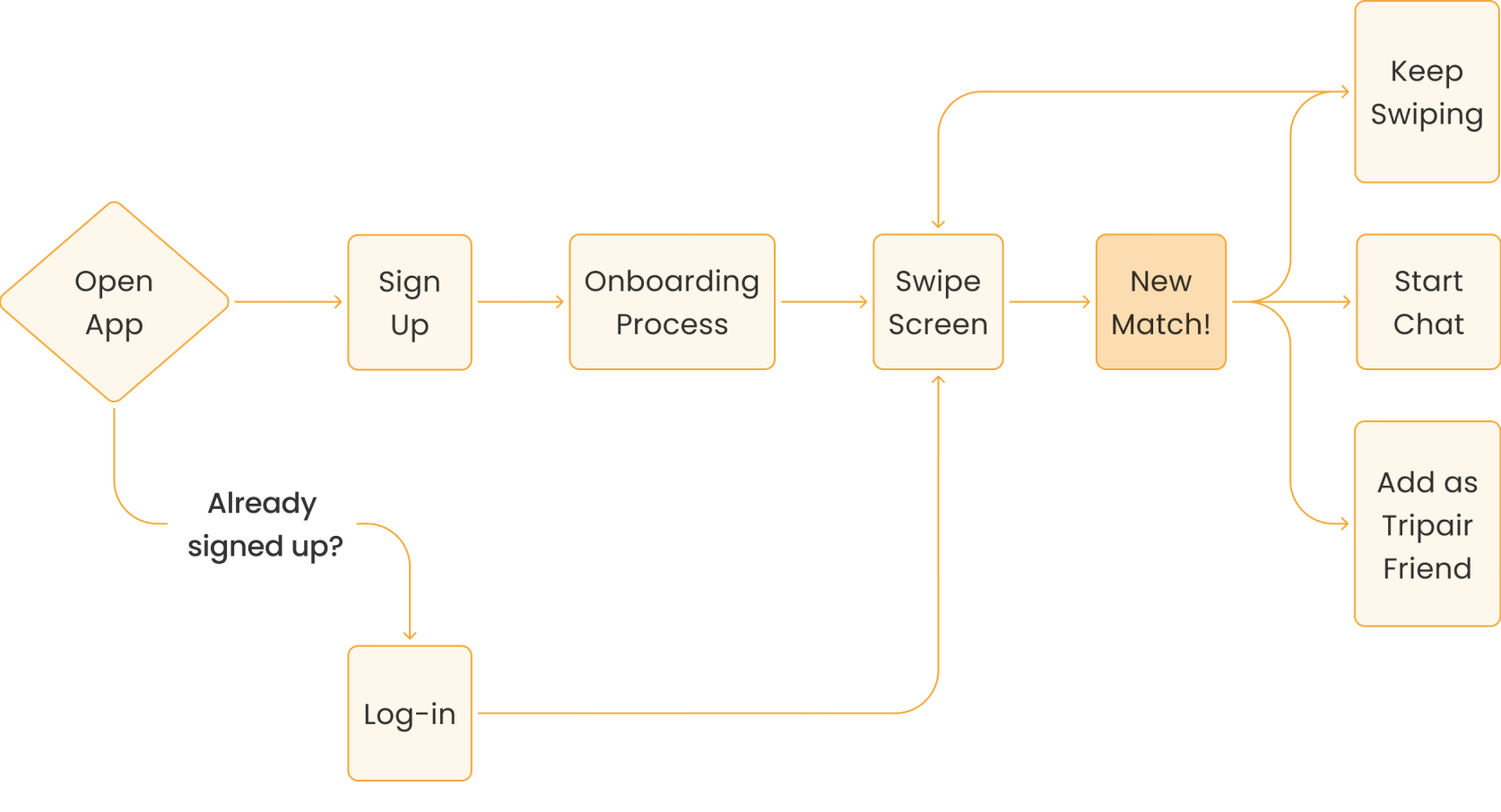


From Needs to Solutions
Designing for Real Travel Moments
Each feature reflects a specific user behavior or insight. We started from the moment, not the module.
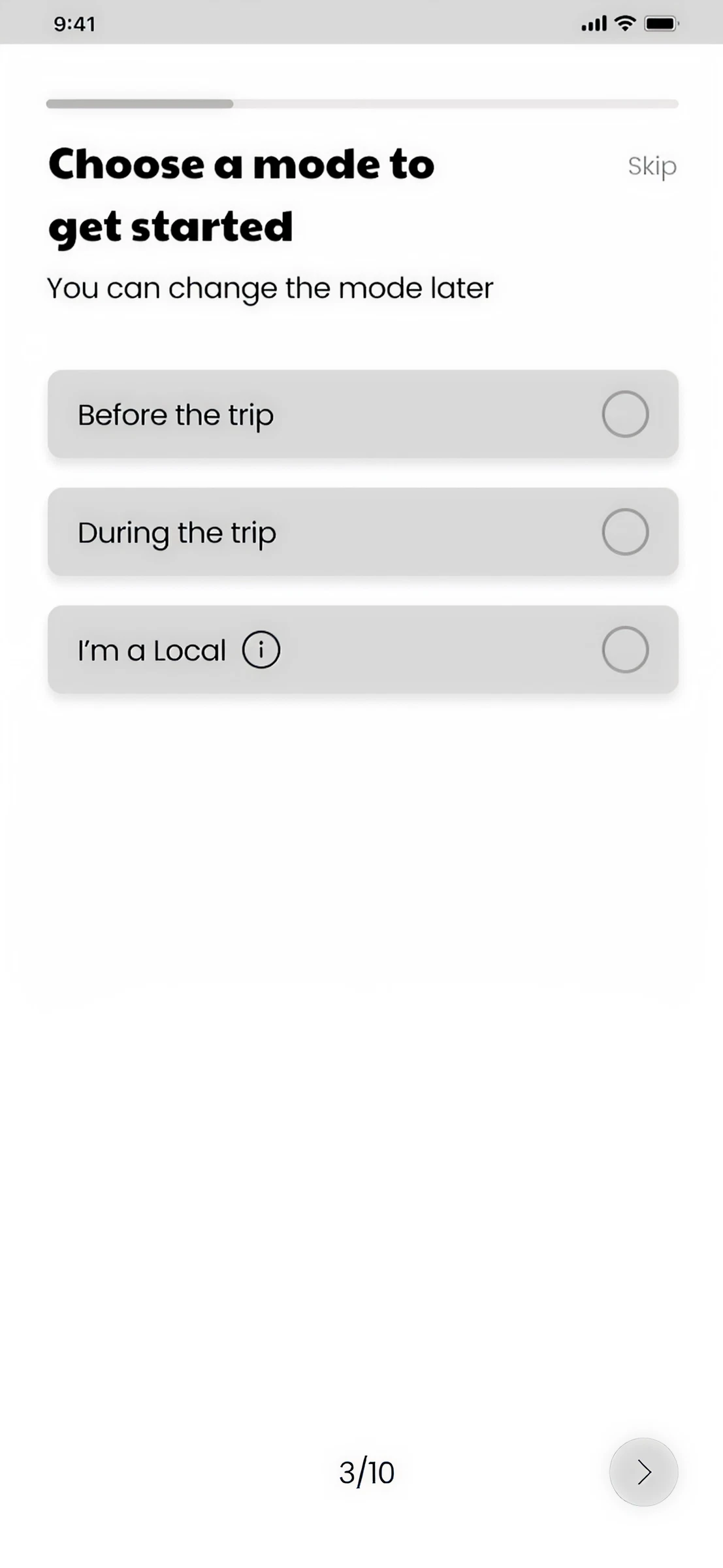
Onboarding

I want to find people who match how I like to travel

UX Goal:
Help users express their travel style in a simple, clear way.
View UI

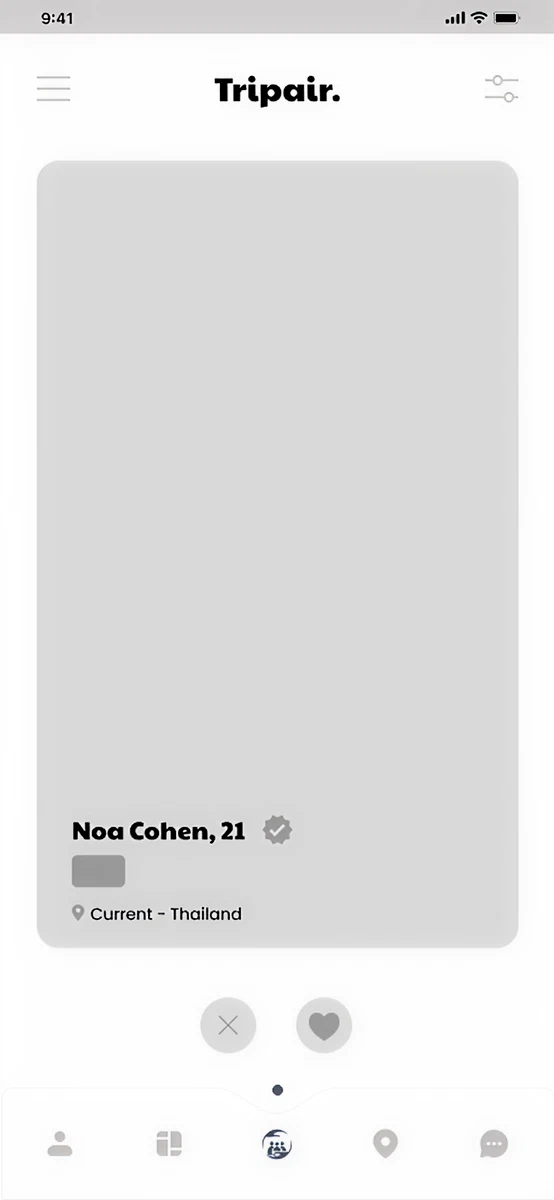
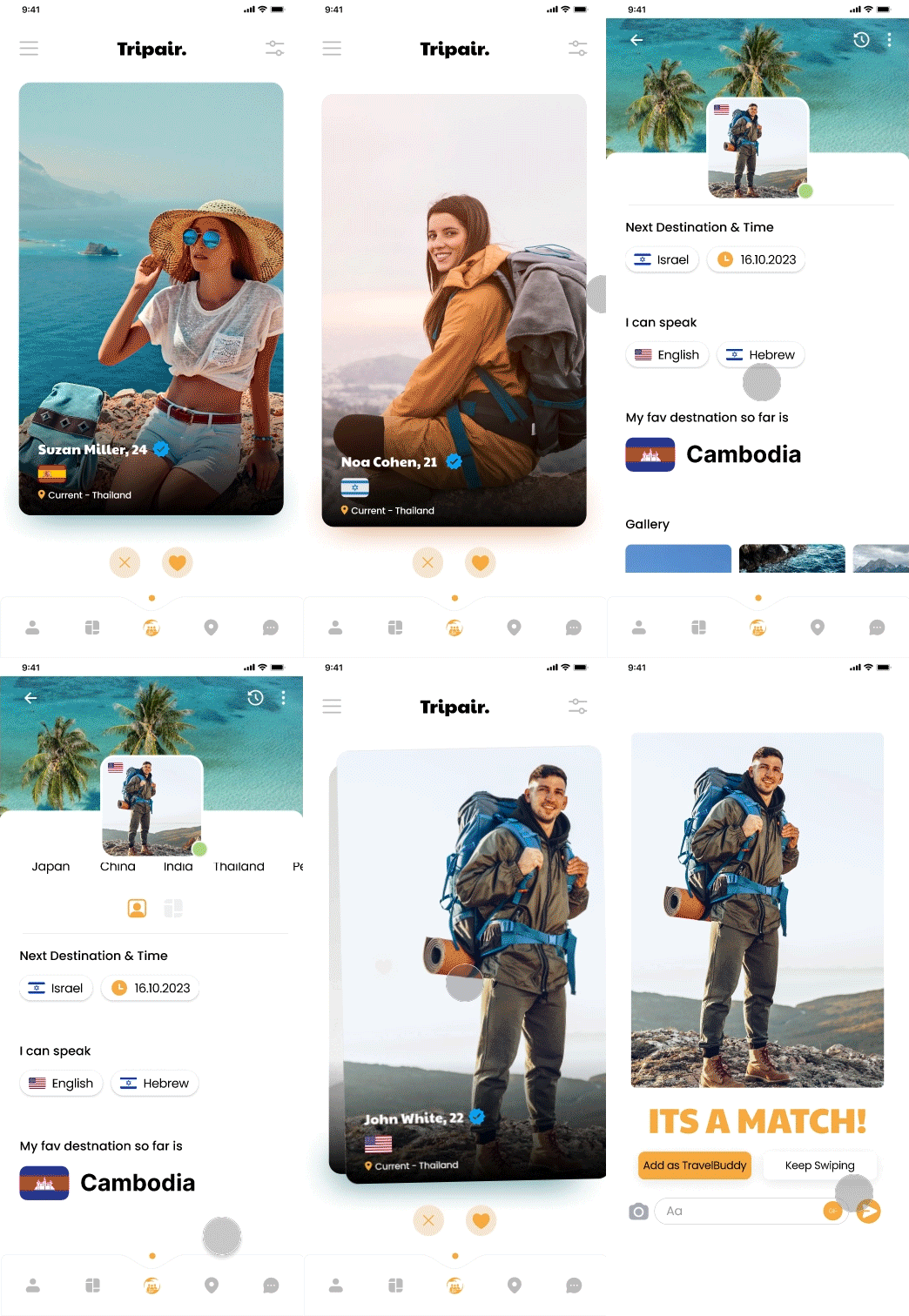
Match Screen
I'd rather connect before I book.
UX Goal:
Make finding travel partners simple and fun, not stressful. A familiar swipe interaction supports playful, intuitive exploration.
View UI
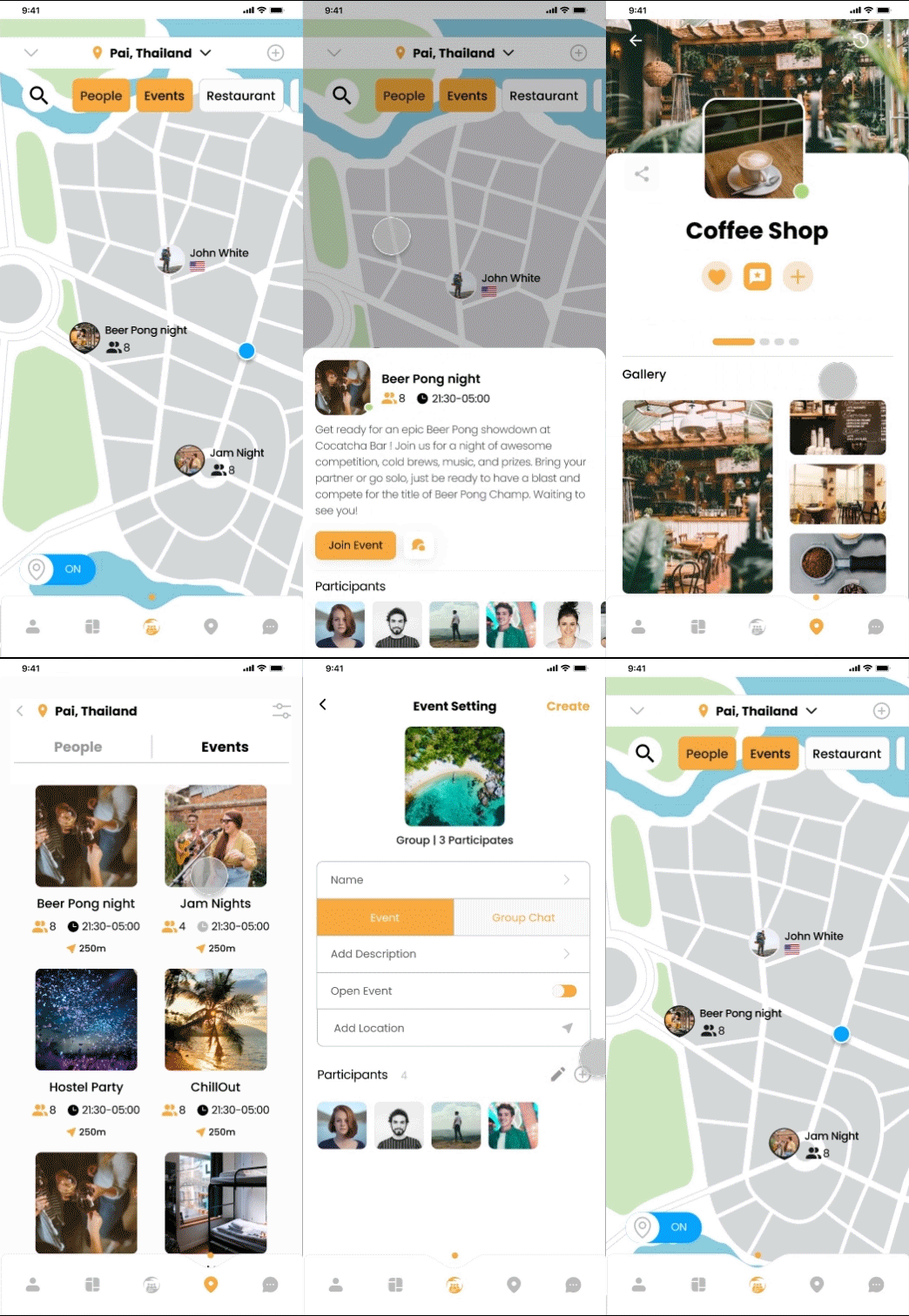
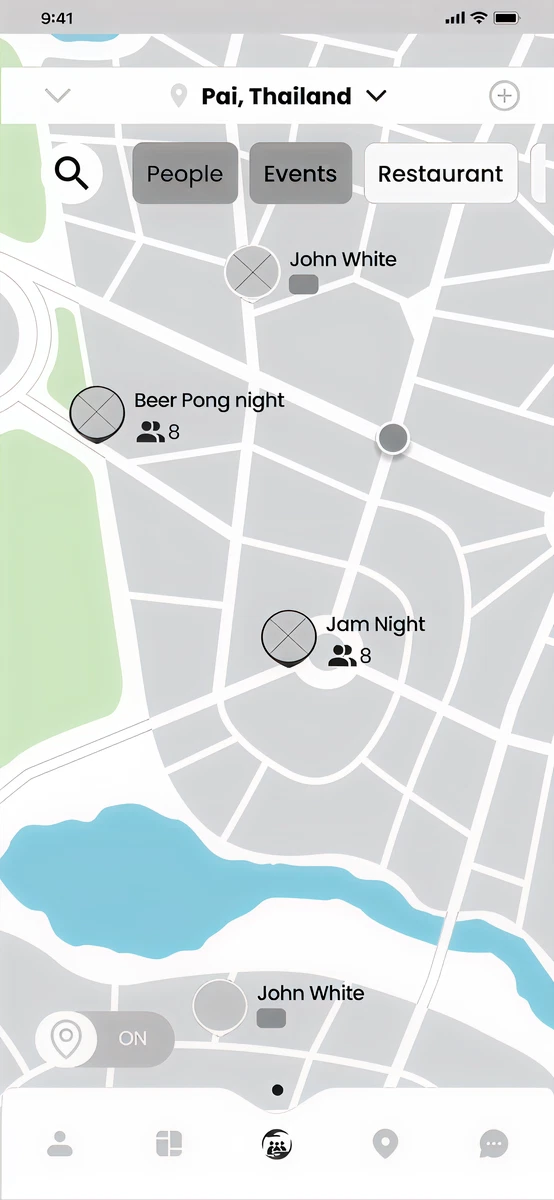
Live Map
I want to see who’s around, and what’s happening
UX Goal:
Support spontaneous connections and event exploration in real time.
View UI
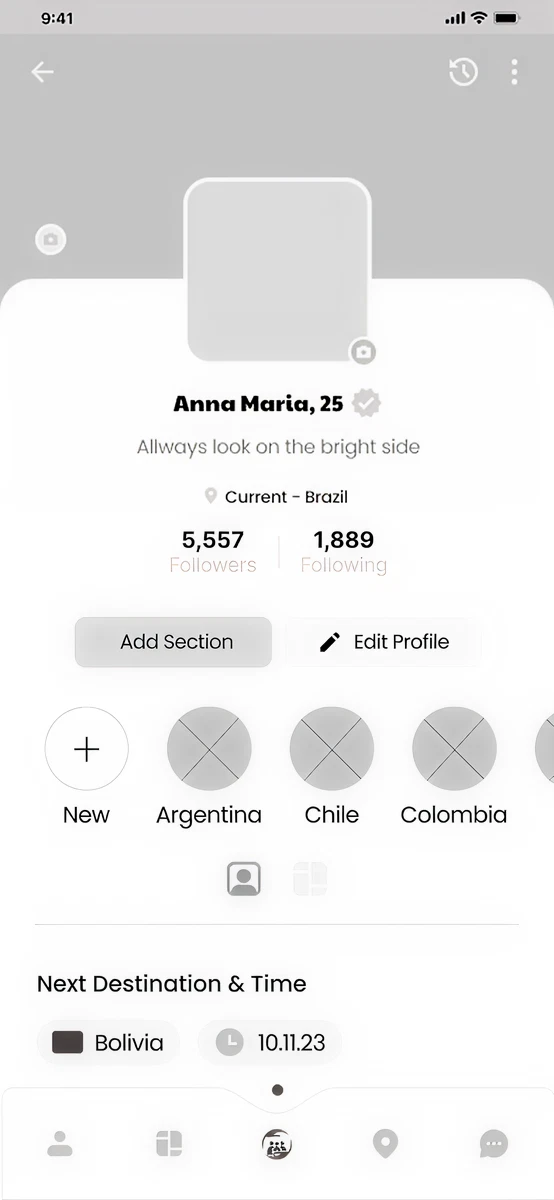
Profile View
Is this someone I’d like to meet?
UX Goal:
Help users make quick, confident decisions about potential connections.
View UI
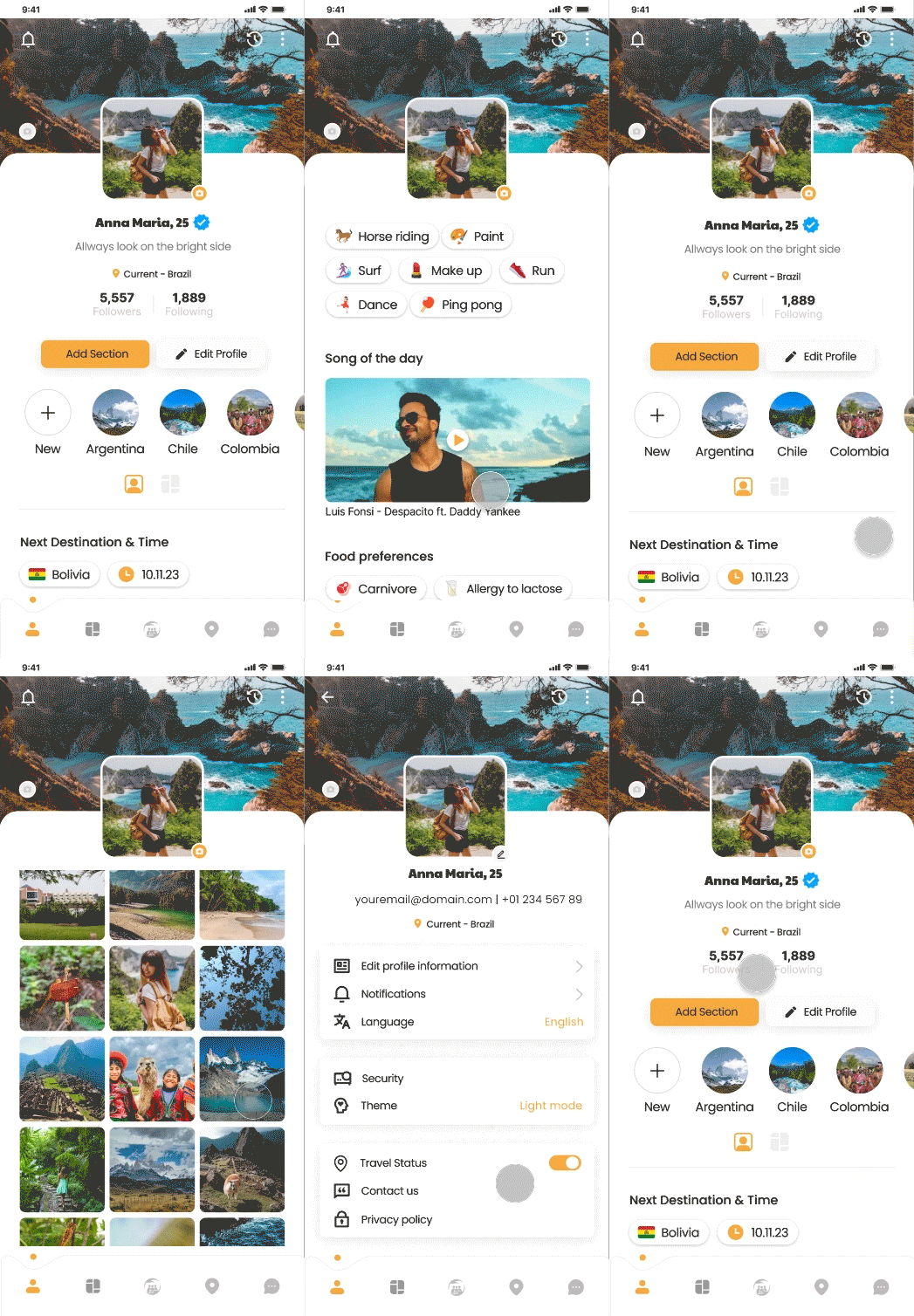


Visual Language
We wanted Tripair to feel warm, approachable, and social — not like a utility, but like an invitation to connect. The visual language supports that goal.
Orange was chosen as the primary color because it conveys energy, curiosity, and openness — a reflection of the kind of traveler we’re designing for. It also helps the app stand out in a category where many competitors lean toward corporate blues and dark palettes.
Typography and layout were kept clean and modern to support clarity and ease of use on the go. Rounded elements and subtle microinteractions add a sense of friendliness and playfulness, aligning with the tone of the swipe-based discovery experience and the overall feel of casual, real-world connection.
At every step, the goal was to create a visual language that enhances the sense of exploration and connection, making the experience feel inviting, fun, and easy to navigate.

Conclusion
Working on Tripair pushed me to grow as a designer in ways that go far beyond visual design or feature creation.
The process taught me how critical it is to stay grounded in real user needs, especially when designing for experiences that are social, emotional, and trust-based. It also highlighted the importance of adaptability — many of my early assumptions evolved through user research and iteration, and I learned to embrace that evolution as part of the design process.
One of the biggest takeaways was understanding that great design means designing for feeling, not just for usability. In this project, creating a sense of safety, excitement, and openness was just as important as building a functional product.
Tripair reinforced for me that great design is about curiosity, empathy, and continuous learning — lessons I now bring to every project I take on.

Academic Project
Tripair
Designing Human Connection Through Travel
UX/UI
Research
Prototyping
The Spark
It started with a familiar pattern: travelers trying to connect with others but relying on tools that weren’t made for that purpose. Some posted in Facebook groups like “Backpackers Thailand” and hoped someone decent would respond. Others swiped through dating apps like Bumble just to find someone to hang with. Many gave up, booked solo, and crossed their fingers they'd meet friendly faces along the way.
The Gap We Saw
What struck us most was how unsupported these moments felt.
People clearly wanted connection but had no tool designed for it. They were improvising with platforms that didn’t understand the travel experience. Tripair was created to fill that gap: a space where connection on the road feels natural, safe, and human.
People clearly wanted connection — but had no tool designed for it. They were improvising with platforms that didn’t understand the travel experience. Tripair was created to fill that gap: a space where connection on the road feels natural, safe, and human.
Research
Before moving into design, our first goal was to understand the emotional and practical challenges people face when trying to connect with others while traveling. We set out to explore three key areas:
- How travelers currently seek social connection, both before and during their trips.
- What makes a connection feel safe, compatible, and worth pursuing — especially with strangers.
- How travelers currently seek social connection, both before and during their trips.
We gathered insights from travelers of all kinds - solo adventurers, backpackers, locals, and small groups - through informal interviews, survey responses, and firsthand travel stories.
What we learned?
Before moving into design, our first goal was to understand the emotional and practical challenges people face when trying to connect with others while traveling. We set out to explore three key areas:
Compatibility matters
not just in destination, but in rhythm, social energy, budget, and travel style.
Trust and safety are top priorities
people want to meet others, but only if it feels clear and secure.
There’s no dedicated social layer for travelers
not just in destination, but in rhythm, social energy, budget, and travel style.
Real-time discovery is under-served
not just in destination, but in rhythm, social energy, budget, and travel style.
These insights became the foundation for Tripair’s product philosophy: Design for timing, trust, compatibility, and low-pressure interaction - all within one seamless experience.
Audience Overview
Tripair is designed for socially curious, mobile-first travelers aged 18–35 who believe people are the best part of the journey. They are:
Young and transitional, Often between school, jobs, or major life shifts.
Often between school, jobs, or major life shifts.


Young and transitional, Often between school, jobs, or major life shifts.
Favoring flexible, off-the-beaten-path travel.
Young and transitional, Often between school, jobs, or major life shifts.
Motivated by shared discovery and spontaneous interaction.


Core Use Cases
We identified three main types of users:
0.1
Pre-Trip Travelers
Users preparing for an upcoming journey who want to connect with compatible partners before booking. They prioritize thoughtful alignment around travel style, interests, and timing.
0.2
On-the-Road Travelers
Already traveling, they want to meet people in the moment — for a coffee, a hike, or shared exploration. They look for quick, casual, low-pressure connections.
0.3
Social Locals
Residents interested in connecting with travelers visiting their city. They seek casual cultural exchange and are motivated by proximity and real-time availability.
These groups approach connection differently, but all share a desire for meaningful, context-aware interactions. This shaped how we structured Tripair’s experience.
Market Landscape
We studied both direct competitors (e.g., GAFFL, Travello) and indirect ones (e.g., Bumble, Couchsurfing, Facebook Groups).
What we observed:
- Many platforms solve part of the problem (matching, content, events), but none offer a complete, user-intent-driven solution.
- Dating apps cause intent confusion.
- Couchsurfing is high-commitment and trust-heavy.
- Meetup lacks real-time spontaneity.
- Facebook groups are noisy and unstructured.
Tripair’s Opportunity:
- Focus on social compatibility, not romance or hosting
- Combine pre-trip planning and real-time discovery
- Build low-pressure interactions around verified, like-minded people
- Integrate event and map-based exploration
Adaptive User Flows
While Tripair supports three distinct user groups, our research showed that these groups interact with the app through two primary behavioral patterns.
Pre-Trip Travelers prioritize compatibility and planning.
Their flow centers on building a profile, discovering aligned matches, and creating trust before travel.
On-the-Road Travelers and Social Locals share similar motivations.
Both open Tripair to discover people and events nearby, with a focus on immediate availability and in-the-moment interaction.
This insight led us to design two adaptive user flows:
Pre-Trip Travelers
From Needs to Solutions
Designing for Real Travel Moments
Each feature reflects a specific user behavior or insight. We started from the moment, not the module.
Onboarding
I want to find people who match how I like to travel
UX Goal:
Help users express their travel style in a simple, clear way.
View UI
Match Screen
I'd rather connect before I book.
UX Goal:
Make finding travel partners simple and fun, not stressful. A familiar swipe interaction supports playful, intuitive exploration.
View UI
Live Map
I want to see who’s around, and what’s happening
UX Goal:
Support spontaneous connections and event exploration in real time.
View UI
Profile View
Is this someone I’d like to meet?
UX Goal:
Help users make quick, confident decisions about potential connections.
View UI
Visual Language
We wanted Tripair to feel warm, approachable, and social — not like a utility, but like an invitation to connect. The visual language supports that goal.
Orange was chosen as the primary color because it conveys energy, curiosity, and openness — a reflection of the kind of traveler we’re designing for. It also helps the app stand out in a category where many competitors lean toward corporate blues and dark palettes.
Typography and layout were kept clean and modern to support clarity and ease of use on the go. Rounded elements and subtle microinteractions add a sense of friendliness and playfulness, aligning with the tone of the swipe-based discovery experience and the overall feel of casual, real-world connection.
At every step, the goal was to create a visual language that enhances the sense of exploration and connection, making the experience feel inviting, fun, and easy to navigate.

Conclusion
Working on Tripair pushed me to grow as a designer in ways that go far beyond visual design or feature creation.
The process taught me how critical it is to stay grounded in real user needs, especially when designing for experiences that are social, emotional, and trust-based. It also highlighted the importance of adaptability — many of my early assumptions evolved through user research and iteration, and I learned to embrace that evolution as part of the design process.
One of the biggest takeaways was understanding that great design means designing for feeling, not just for usability. In this project, creating a sense of safety, excitement, and openness was just as important as building a functional product.
Tripair reinforced for me that great design is about curiosity, empathy, and continuous learning — lessons I now bring to every project I take on.


Academic Project
Tripair
Designing Human Connection Through Travel
UX/UI
Research
Prototyping
The Spark
It started with a familiar pattern: travelers trying to connect with others but relying on tools that weren’t made for that purpose. Some posted in Facebook groups like “Backpackers Thailand” and hoped someone decent would respond. Others swiped through dating apps like Bumble just to find someone to hang with. Many gave up, booked solo, and crossed their fingers they'd meet friendly faces along the way.


The Gap We Saw
What struck us most was how unsupported these moments felt.
People clearly wanted connection but had no tool designed for it. They were improvising with platforms that didn’t understand the travel experience. Tripair was created to fill that gap: a space where connection on the road feels natural, safe, and human.
People clearly wanted connection — but had no tool designed for it. They were improvising with platforms that didn’t understand the travel experience. Tripair was created to fill that gap: a space where connection on the road feels natural, safe, and human.
Research
Before moving into design, our first goal was to understand the emotional and practical challenges people face when trying to connect with others while traveling. We set out to explore three key areas:
- How travelers currently seek social connection, both before and during their trips.
- What makes a connection feel safe, compatible, and worth pursuing- especially with strangers.
- How travelers currently seek social connection, both before and during their trips.
We gathered insights from travelers of all kinds - solo adventurers, backpackers, locals, and small groups - through informal interviews, survey responses, and firsthand travel stories.

What we learned?
Before moving into design, our first goal was to understand the emotional and practical challenges people face when trying to connect with others while traveling. We set out to explore three key areas:
Compatibility matters
not just in destination, but in rhythm, social energy, budget, and travel style.
Trust and safety are top priorities
people want to meet others, but only if it feels clear and secure.
There’s no dedicated social layer for travelers
not just in destination, but in rhythm, social energy, budget, and travel style.
Real-time discovery is under served
not just in destination, but in rhythm, social energy, budget, and travel style.
These insights became the foundation for Tripair’s product philosophy: Design for timing, trust, compatibility, and low-pressure interaction - all within one seamless experience.
Audience Overview
Tripair is designed for socially curious, mobile-first travelers aged 18–35 who believe people are the best part of the journey. They are:
Young and transitional
Often between school, jobs, or major life shifts.

Adventure-Oriented
Favoring flexible, off-the-beaten-path travel.
People-Lovers
Motivated by shared discovery and spontaneous interaction.

Core Use Cases
We identified three main types of users:
0.1
Pre-Trip Travelers
Users preparing for an upcoming journey who want to connect with compatible partners before booking. They prioritize thoughtful alignment around travel style, interests, and timing.
0.2
On-the-Road Travelers
Already traveling, they want to meet people in the moment — for a coffee, a hike, or shared exploration. They look for quick, casual, low-pressure connections.
0.3
Social Locals
Residents interested in connecting with travelers visiting their city. They seek casual cultural exchange and are motivated by proximity and real-time availability.
These groups approach connection differently, but all share a desire for meaningful, context-aware interactions. This shaped how we structured Tripair’s experience.
Market Landscape
We studied both direct competitors (e.g., GAFFL, Travello) and indirect ones (e.g., Bumble, Couchsurfing, Facebook Groups).
What we observed:
- Many platforms solve part of the problem (matching, content, events), but none offer a complete, user-intent-driven solution.
- Dating apps cause intent confusion.
- Couchsurfing is high-commitment and trust-heavy.
- Meetup lacks real-time spontaneity.
- Facebook groups are noisy and unstructured.
Tripair’s Opportunity:
- Focus on social compatibility, not romance or hosting
- Combine pre-trip planning and real-time discovery
- Build low-pressure interactions around verified, like-minded people
- Integrate event and map-based exploration
Adaptive User Flows
While Tripair supports three distinct user groups, our research showed that these groups interact with the app through two primary behavioral patterns.
Pre-Trip Travelers prioritize compatibility and planning.
Their flow centers on building a profile, discovering aligned matches, and creating trust before travel.
On-the-Road Travelers and Social Locals share similar motivations.
Both open Tripair to discover people and events nearby, with a focus on immediate availability and in-the-moment interaction.
This insight led us to design two adaptive user flows:
Pre-Trip Travelers


From Needs to Solutions
Designing for Real Travel Moments
Each feature reflects a specific user behavior or insight. We started from the moment, not the module.
Onboarding
I want to find people who match how I like to travel
UX Goal:
Help users express their travel style in a simple, clear way.
View UI
Tap the Screen to explore

Match Screen
I'd rather connect before I book.
UX Goal:
Make finding travel partners simple and fun, not stressful. A familiar swipe interaction supports playful, intuitive exploration.
View UI
Live Map
I want to see who’s around, and what’s happening
UX Goal:
Support spontaneous connections and event exploration in real time.
View UI
Profile View
Is this someone I’d like to meet?
UX Goal:
Help users make quick, confident decisions about potential connections.
View UI
Visual Language
We wanted Tripair to feel warm, approachable, and social — not like a utility, but like an invitation to connect. The visual language supports that goal.
Orange was chosen as the primary color because it conveys energy, curiosity, and openness — a reflection of the kind of traveler we’re designing for. It also helps the app stand out in a category where many competitors lean toward corporate blues and dark palettes.
Typography and layout were kept clean and modern to support clarity and ease of use on the go. Rounded elements and subtle microinteractions add a sense of friendliness and playfulness, aligning with the tone of the swipe-based discovery experience and the overall feel of casual, real-world connection.
At every step, the goal was to create a visual language that enhances the sense of exploration and connection, making the experience feel inviting, fun, and easy to navigate.

Conclusion
Working on Tripair pushed me to grow as a designer in ways that go far beyond visual design or feature creation.
The process taught me how critical it is to stay grounded in real user needs, especially when designing for experiences that are social, emotional, and trust-based. It also highlighted the importance of adaptability — many of my early assumptions evolved through user research and iteration, and I learned to embrace that evolution as part of the design process.
One of the biggest takeaways was understanding that great design means designing for feeling, not just for usability. In this project, creating a sense of safety, excitement, and openness was just as important as building a functional product.
Tripair reinforced for me that great design is about curiosity, empathy, and continuous learning — lessons I now bring to every project I take on.